
The Real Benefits of Family Game Night (It's More Than Just Fun)

Hess P
Parent tester & co-founder of CoPlayConnect
CoPlayConnect is an Amazon Associate. We earn from qualifying purchases — at no extra cost to you. Affiliate Disclosure
Most parents schedule family game night hoping for a fun evening. What they don't always realize is that something much bigger is happening around that table — or screen.
The benefits of family game night go well beyond entertainment. When parents are intentional about how they play with their kids, gaming becomes one of the most effective tools families have for building connection, developing emotional resilience, growing real-world skills, and establishing healthy gaming habits that last a lifetime.
This isn't about making game night feel like homework. It's about understanding what's already happening when your family plays together — and learning how to make it count.
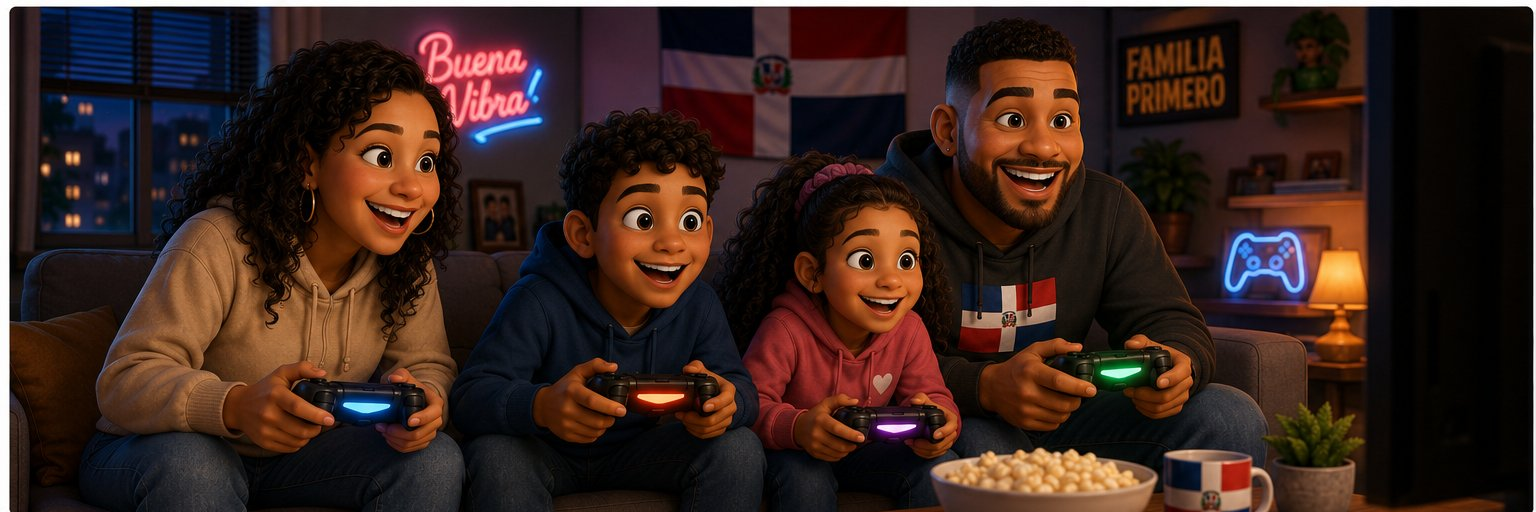
1. Family Game Night Builds Genuine Connection
In a world of packed schedules and competing screens, sitting down together with a shared goal — even if that goal is just beating a level or winning a round — creates something rare: undivided, mutual presence.
That shared presence is where connection happens.
Research consistently shows that families who engage in regular shared activities report stronger communication, greater trust, and higher levels of emotional closeness. Game night creates a low-pressure environment where kids and parents can interact as teammates, competitors, and problem-solvers — not just as authority figure and child.
Conversation starters and connection moments emerge naturally during play. The pause between turns. The laugh after a surprise move. The "how did you figure that out?" after a tough puzzle. These micro-moments of genuine interaction are the building blocks of a close family relationship — and they happen organically when you're playing together.
At CoPlayConnect, Connection is the first pillar of our Connection Grade™ evaluation for a reason. Not every game creates these moments equally. Some games invite conversation and collaboration. Others isolate players in their own experience. Knowing the difference helps parents choose games that actually bring the family closer.
2. Gaming Supports Child Development in Powerful Ways
Child development through gaming is one of the most misunderstood topics in parenting today. The conversation is almost always framed around risk — screen addiction, violent content, social isolation. But when families play together intentionally, the developmental benefits are substantial and well-documented.
Here's what's actually happening when your child plays:
Cognitive development: Strategy games, puzzle games, and open-world exploration build critical thinking, spatial reasoning, planning, and decision-making. Kids learn to analyze situations, weigh options, and anticipate consequences — all core executive function skills.
Language and communication: Multiplayer and cooperative games require kids to articulate ideas, negotiate with teammates, give and receive instructions, and express frustration constructively. These are communication skills that transfer directly to school and social settings.
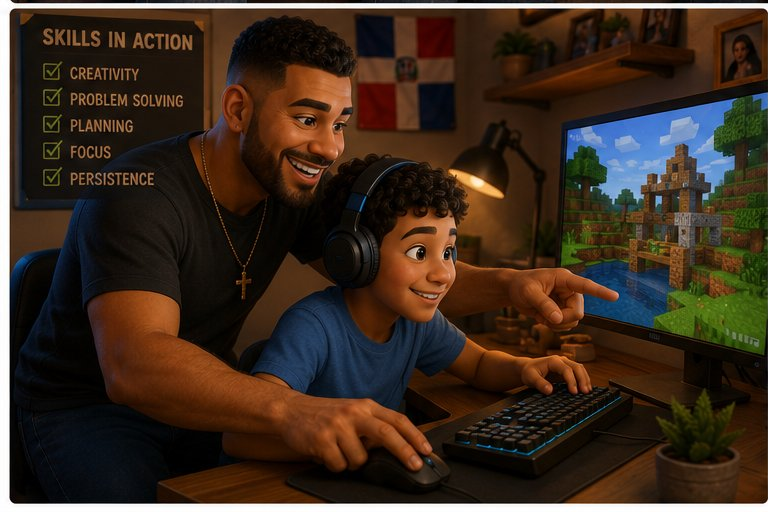
Creativity and imagination: Sandbox and building games like Minecraft — the game that inspired CoPlayConnect's own origin story — give kids a canvas for creative expression and systems thinking. Children who build, design, and tell stories through games develop flexible, imaginative minds.
Learning and academic connection: The second pillar of our Connection Grade™ is Learning — how much cognitive and educational value a game carries. Many games teach history, science, math, language, and problem-solving in ways that feel engaging rather than instructional. When parents understand what a game teaches, they can reinforce those lessons in conversation and daily life.
3. Game Night Builds Emotional Regulation and Resilience
One of the most underappreciated benefits of family game night is what happens when things go wrong.
A child loses a close match. A strategy falls apart at the last second. A sibling gets lucky and pulls ahead. These moments — frustrating, disappointing, sometimes infuriating — are actually some of the most valuable experiences a game night can provide.
Emotional regulation and resilience through play develop when kids repeatedly face low-stakes challenges and learn to recover. Game night gives children a safe space to practice:
- Handling disappointment without shutting down
- Managing competitive impulses toward teammates and opponents
- Accepting outcomes they didn't choose
- Trying again after failure
- Regulating frustration in real time with people they trust
These are not passive benefits. They require a present, intentional parent. When you name the emotion ("I can see you're frustrated — that was a tough loss"), model healthy responses ("I was hoping we'd win too, but that was a great game"), and create space for recovery instead of dismissing the feeling, you're doing something no classroom curriculum can replicate.
Emotional Growth is the third pillar of the Connection Grade™ because CoPlayConnect believes this is where game night becomes genuinely transformative for families. The games that score highest in this category are the ones that create these teachable moments most naturally.
4. Healthy Gaming Habits Start With You
One of the most powerful things a parent can do to establish healthy gaming habits for families is to game alongside their child — not just monitor from a distance.
When parents participate, they shift the dynamic entirely. Gaming stops being something kids disappear into and starts being something the family shares. That shift alone changes how children relate to screens: with more balance, more awareness, and more openness to parental guidance.
Healthy gaming habits don't come from restriction alone. They come from:
- Playing together regularly so gaming is associated with connection, not isolation
- Choosing games intentionally using tools like Parent-Approved game discovery so you know what your child is actually experiencing
- Setting natural boundaries through structure (Game Night has a start and end time) rather than constant conflict
- Talking about games openly so kids feel safe sharing what they're playing instead of hiding it
CoPlayConnect's Parent-Approved game discovery system exists precisely for this reason. Parents shouldn't have to spend hours researching whether a game is appropriate. They need honest, clear breakdowns that help them make confident decisions — and join in without hesitation.
5. Games Reveal Real-World Skills and Career Pathways
Here's a perspective shift that changes how many parents see gaming entirely: the skills your child is building in their favorite games are real, transferable, and increasingly valuable in the modern workforce.
Real-world skills and career pathways from gaming interests are more connected than most parents realize:
- A child obsessed with Minecraft may have a natural aptitude for architecture, engineering, urban planning, or 3D design
- A kid who thrives in strategy games often demonstrates project management, systems thinking, and analytical reasoning
- A young gamer who gravitates toward narrative RPGs may be developing deep empathy, storytelling instinct, and emotional intelligence
- Children who excel at fast-paced multiplayer games frequently show strong processing speed, hand-eye coordination, and quick decision-making under pressure
The Real-Life Transfer pillar of the Connection Grade™ evaluates exactly this — how well a game's core skills map to real life. When parents understand this connection, they can affirm their child's gaming in a way that feels validating rather than dismissive. "You're really good at organizing your team" is a much more connecting response than "okay, time's up."
Game Night becomes even more meaningful when parents use it as a window into who their child is becoming.
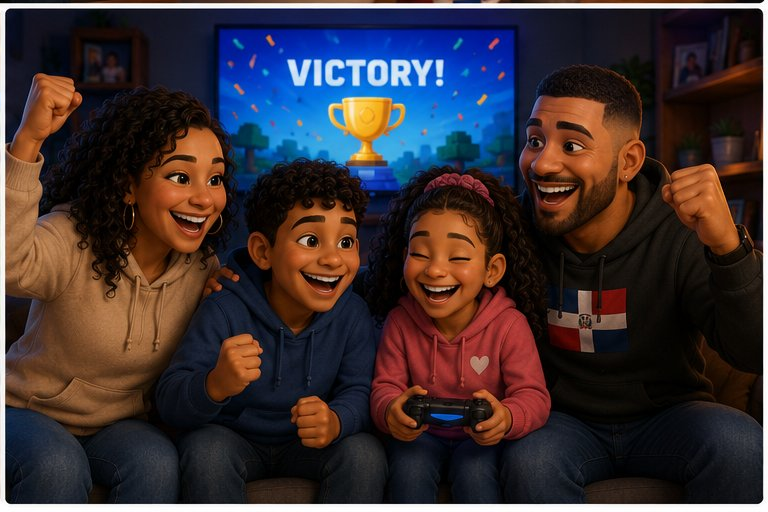
6. Family Game Night Planning Makes It Stick
The families who see the most benefit from game night aren't necessarily the ones who play the most — they're the ones who play with the most intention.
Family Game Night Planning is a core feature of CoPlayConnect because we know that a little structure goes a long way. When game night is planned rather than improvised, it happens more consistently, runs more smoothly, and creates the kind of predictability kids thrive on.
Simple planning habits that make a real difference:
- Choose your game in advance using the Connection Grade™ so you know what kind of night you're setting up
- Use GameMatch Arcade™ to get personalized recommendations based on your child's interests, age, and your family's goals
- Set a consistent time — same night, same general window — so kids know what to expect
- Prepare conversation starters ahead of time so the night includes connection beyond just gameplay
- Rotate who chooses the game to give every family member ownership and investment
When families plan with purpose, game night stops being something that "might happen on Friday" and starts being something everyone looks forward to all week.
The Bigger Picture: Why This All Matters
The benefits of family game night are not accidental. They happen when parents show up with intention — choosing games thoughtfully, engaging fully, and treating play as a legitimate investment in their family's connection and their child's development.
CoPlayConnect was built for exactly this. As parents ourselves, we know the guilt, the uncertainty, and the exhaustion that comes with navigating gaming in a family. We built Parent-Approved game discovery, the Connection Grade™ framework, GameMatch Arcade™, and Family Game Night Planning tools because we believed families deserved better than guesswork.
Gaming, done right, isn't the enemy of quality family time. It's one of the best vehicles for it.
The screen isn't the problem. The intention is the difference.
Ready to find games that check every box? Explore GameMatch Arcade™ and discover Parent-Approved games rated through the Connection Grade™ — built for families who want to play with purpose.