
Family Game Night Tips That Actually Work (Even on Hard Weeks)

Hess P
Parent tester & co-founder of CoPlayConnect
Some family nights fall apart before they start. One child is already bored, another is gearing up to dominate, dinner ran late, and the game that sounded fun turns into a meltdown in under ten minutes.
Sound familiar?
If you're searching for family game night tips, here's the most important one: stop trying to make it perfect. The goal isn't a magical evening — it's a repeatable experience your family actually wants to do again.
That shift changes everything. When you stop chasing the ideal night and start building a reliable ritual, gaming stops being a source of tension and starts becoming one of your family's best tools for connection.
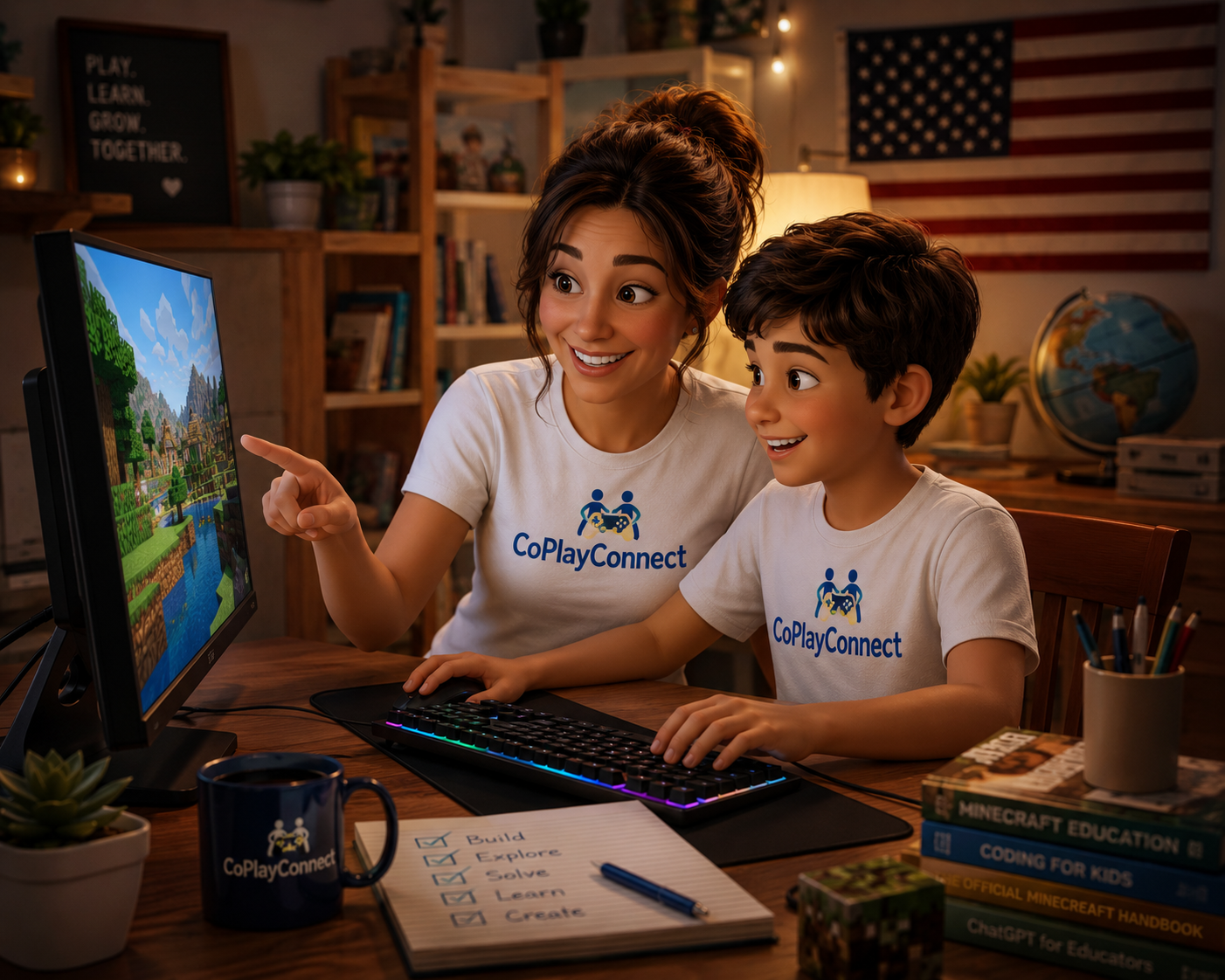
Start With the Outcome, Not the Game
Most families begin game night by asking, "What should we play?" A better first question is: "What does our family need tonight?"
Do you need laughter after a stressful week? A low-pressure way to reconnect with a child who's been distant? A chance for siblings to cooperate instead of compete? Your answer should shape the game you choose — not the other way around.
This is where a lot of parents get stuck. A game can be wildly popular and still be completely wrong for your family on a given night. Fast-paced competitive games can be exciting, but they can also overwhelm a tired child or ignite sibling conflict. Cooperative games may foster connection, but if your kids wanted a real challenge, they might feel flat.
At CoPlayConnect, we evaluate games through four lenses: Connection, Learning, Emotional Growth, and Real-Life Transfer — what we call the Connection Grade™. Even if you never name those categories out loud, thinking through them before you pick a game will consistently lead to better nights.
Practical Family Game Night Tips for Real Life
Here's the truth: if family game night only works when everyone is rested, cheerful, and free for two hours, it's not going to happen very often. These tips are built for real families with real schedules.
1. Pick a Consistent Time Window
Don't chase the perfect moment — protect a predictable one. Friday after pizza. Sunday afternoon. A short Wednesday session before bedtime. Kids engage more easily when they know what to expect, and consistency matters far more than duration.
2. Start Short
Thirty to forty-five minutes is plenty for most school-age kids, especially when you're building a new routine. End while everyone is still having fun. Stopping on a high note is always better than stretching the night until someone melts down.
3. Set the Tone Before You Start
Take two minutes at the beginning to name the goal for the night — teamwork, laughs, trying something new. You can even let kids share one high and one low from the week before you start playing. This gives the evening a clear center and transitions kids out of whatever they were doing before.
4. Establish One or Two House Rules
Keep them short and positive. We help new players. We cheer effort. We take a quick breather if someone gets frustrated. These rules matter because game night is often where emotional skills get tested — turn-taking, losing gracefully, handling a change in plans. Simple guardrails help protect the experience.
5. End With a Ritual
Ask what was funny, what was hard, or what you should play next time. Families build connection through repetition. A small closing ritual signals to kids that this isn't random screen time — it's intentional shared time with a purpose.
How to Choose the Right Game
The best game for family game night isn't the highest-rated one. It's the one your family can actually enjoy together.
Consider skill gaps first. If one person is significantly more experienced than everyone else, the night can become frustrating fast. Younger kids feel shut out, older kids either dominate or get bored. In those cases, cooperative games, party games, and games with simple mechanics tend to work better than games that reward deep expertise.
Pay attention to emotional temperature. Some kids bounce back easily from a loss. Others take it hard. Neither is wrong — but it should shape your pick. A high-stakes competitive game on a low-capacity night is rarely worth it.
When in doubt, default to one of these three types:
- Cooperative games — players work toward a shared goal together
- Creative sandbox games — open-ended building, storytelling, or exploration
- Light party-style games — easy to learn, easy to reset, lots of room for laughter
These formats leave the most space for conversation, flexible participation, and genuine connection.
If you're including video games, handle setup before everyone sits down. Update the game, charge the controllers, and clarify turn order ahead of time. These small logistics create a surprising amount of friction when ignored.
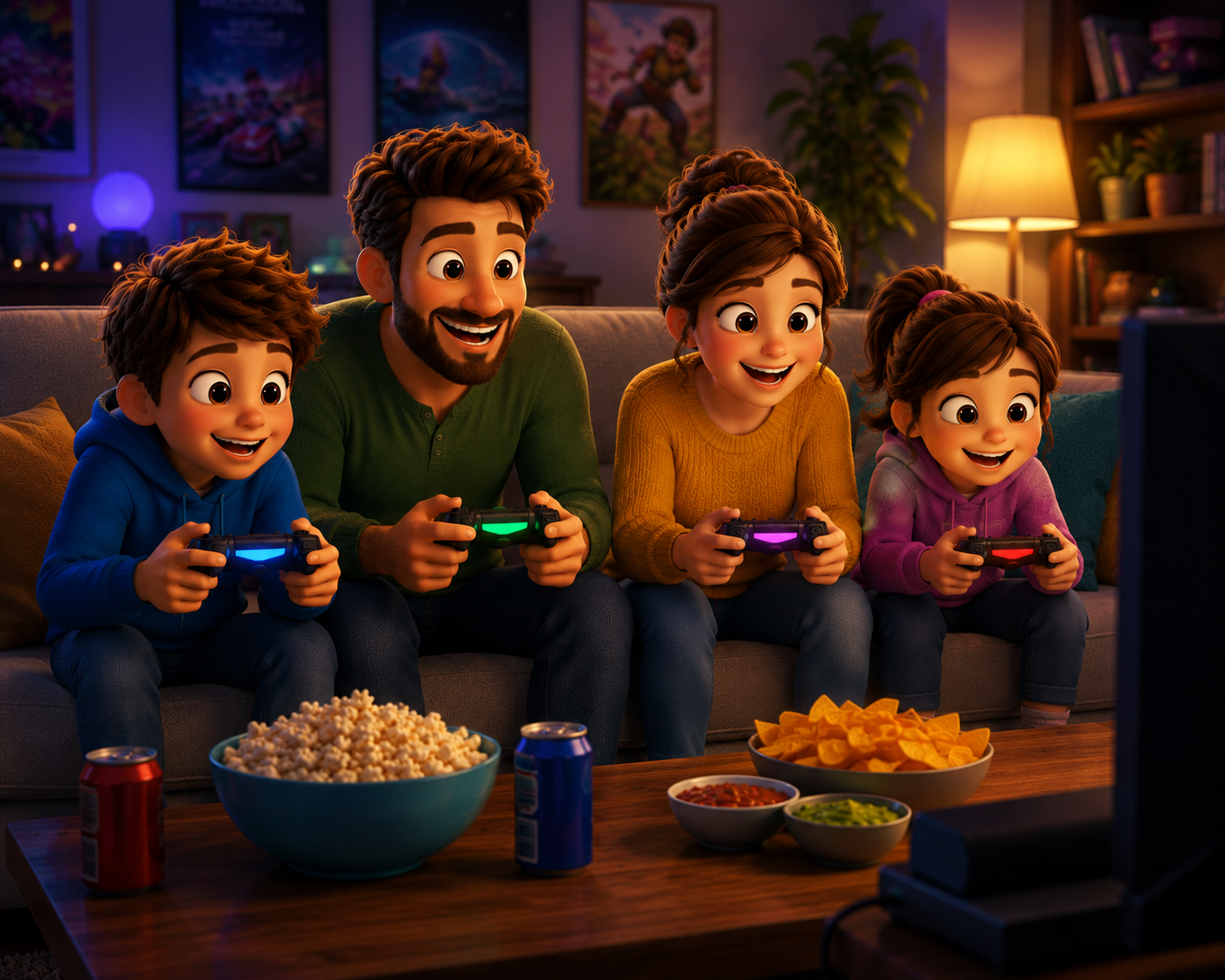
Planning for Different Ages and Personalities
One of the most common reasons families give up on game night is assuming everyone must enjoy the same thing in the same way. That's rarely true — and it doesn't have to be.
If you have a wide age range, look for layered participation. A younger child can handle simple choices or easy tasks while an older child manages strategy. Many games support this naturally once you look for it.
If one child loves action and another prefers creativity, alternate nights or look for games that include both fast-paced moments and open-ended play.
Rotate ownership. Let one child pick the game this week. Another chooses the snack or team names next week. Shared ownership builds buy-in.
If a child is hesitant, don't force full participation. Watching for a few minutes, helping with setup, or joining just one round is enough of an entry point. Family game night should invite connection — not create another power struggle.
Expect Friction — and Plan for It
A good family game night isn't one where nobody gets frustrated. It's one where your family learns to handle frustration without the whole night collapsing.
If your kids are competitive, talk before the game about what winning and losing will look like. If transitions are hard for one child, give a five-minute warning before wrapping up. If someone tends to quit after a mistake, normalize the feeling early: "It's okay to be disappointed. Let's take a breath and try one more round."
These moments are more valuable than they might seem. Games create low-stakes practice for real emotional skills — waiting your turn, adapting to setbacks, recovering from disappointment, collaborating under pressure. That's not a side benefit of family game night. For many families, it's the whole point.
Track What Actually Works
The families who build lasting game night rituals aren't the ones who guess better — they're the ones who notice patterns.
After each session, do a quick mental replay. Which game held everyone's attention? Who felt included? What created conflict? Did the night leave the family with more energy or less? You don't need a formal system. Even a quick note on your phone builds a picture over time.
You'll start to see your family's rhythm. Maybe your kids do better with cooperative games on school nights and competitive ones on weekends. Maybe one child needs to hear the rules before everyone else sits down. Maybe the best nights happen when snacks are simple and expectations are low.
That kind of pattern recognition turns game night from a hopeful idea into a reliable part of your family's life.
The Simplest Family Game Night Tip of All
Consistency comes from reducing friction, not adding more ambition.
Choose fewer games. Repeat favorites. Keep setup easy. Protect the time — but stay flexible when life gets heavy.
And talk about game night like it's part of who your family is. Not in a pressured way, but in a grounding one: This is something we do. We make time to play together. We learn each other through games.
That message is especially powerful for parents who've felt uncertain about gaming. You don't need to be a gaming expert to do this well. You just need a thoughtful approach and the willingness to show up with your kid in mind.
A short, well-chosen game and a parent who's fully present will always do more for connection than a much bigger plan that never actually happens.
Start small. Pay attention. Let the ritual grow.
Looking for games that fit your family's goals? Explore GameMatch Arcade™ on CoPlayConnect — personalized game recommendations built around connection, not just entertainment.