
Games to Play With Kids That Build Real Connection

Hess P
Parent tester & co-founder of CoPlayConnect
CoPlayConnect is an Amazon Associate. We earn from qualifying purchases — at no extra cost to you. Affiliate Disclosure
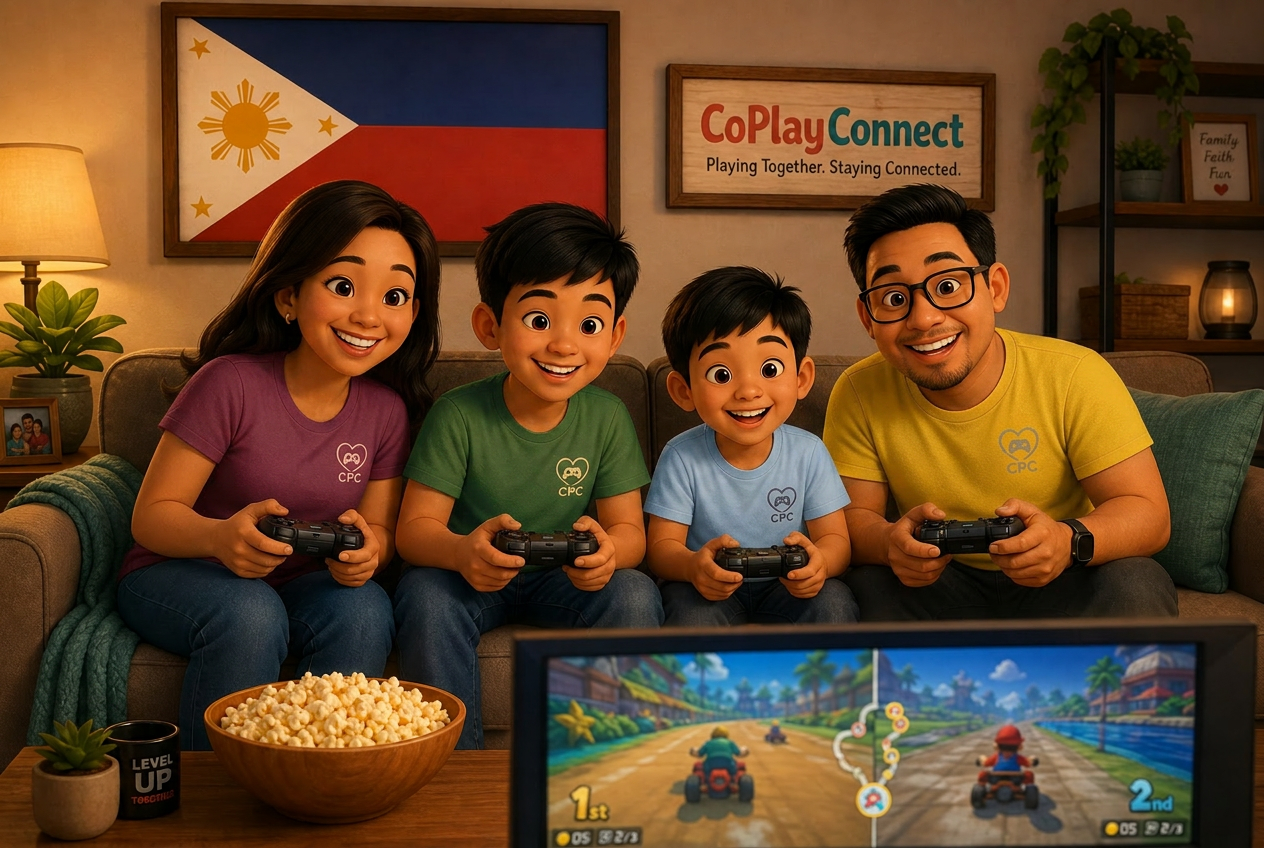
The hardest part of finding good games to play with kids isn't the choice — it's matching the game to your family, in this house, on this night. A game that's perfect for a six-year-old on a slow Sunday is a meltdown waiting to happen for a tired ten-year-old after school.
This is a working list of 25 ideas — video, quick co-op, and screen-free — sorted by age, time, and the kind of mood you're trying to create. Every pick was chosen for one reason: it makes connection easier, not harder.
Pick Smarter in 30 Seconds
Before you scroll, ask three questions:
- How much time do we actually have? 15 minutes, 30, or a real hour?
- What's the energy in the room? Wound up, mellow, or somewhere between?
- What do we want from tonight? Laughs, teamwork, or just a wind-down?
The answer points to a category — not a specific game. That's how you stop relitigating the same five titles every weekend.
10 Video Games to Play With Kids (By Age)
Ages 5–7: Gentle, colorful, easy to pause
- Stardew Valley — calm farming, no fail state, parents handle the menus while kids choose what to plant.
- Untitled Goose Game — silly mischief, short levels, big laughs.
- Lego Builder's Journey — quiet puzzle that doubles as wind-down before bed.
Ages 8–10: Co-op that builds teamwork
- Minecraft — the original sandbox; in Creative mode you can build a house together with no enemies and no pressure.
- Overcooked! 2 — cooperative chaos that teaches communication faster than any conversation will.
- Snipperclips — paper puzzles for two; brilliant for siblings who normally bicker.
- PICO PARK — cheap, short, demands actual teamwork, perfect 30-minute pick.
Ages 11–13: Bigger worlds, real conversation
- It Takes Two — a co-op adventure built entirely around two players helping each other; one of the best parent-kid games ever made.
- Unpacking — quiet, story-rich; sparks surprisingly good conversations about growing up.
- Mario Kart 8 Deluxe — easy on-ramp, fair handicaps, works with mixed ages on the same couch.
8 Quick Co-Op Picks Under 30 Minutes
For school nights and post-dinner windows, where you need a clean ending:
- Sushi Go! — card game, 15 minutes, easy to teach.
- Outfoxed! — cooperative whodunit for younger kids; everyone vs. the game.
- The Mind — silent number-passing card game; weirdly bonding.
- Hues and Cues — color-guessing party game with no losers.
- Forbidden Island — full co-op; the family wins or loses together.
- Telestrations — drawing telephone; will become a family in-joke within one round.
- Just Dance — 5-minute songs, screens that get everyone moving.
- Jackbox Party Pack — phone-as-controller; great for older kids and visiting cousins.
5 Screen-Free Ideas for Mixed Ages
For the nights you want eye contact more than a leaderboard:
- Story dice — roll, take turns adding a sentence; ridiculous stories, real listening.
- Two truths and a wish — a softer twist on two-truths-and-a-lie that gets kids talking about what they actually want.
- Build-a-fort challenge — set a timer, hand over the couch cushions, judge the result.
- Backyard scavenger hunt — write 10 prompts, split into teams; works for ages 5 to 15.
- Family trivia night — each person writes 5 questions about themselves; you'll learn something new every round.
What Makes a Game Actually Worth Playing With Your Kids
Popularity isn't the test. The real test is whether the game leaves your family with more — more laughter, more conversation, more willingness to play again next week.
At CoPlayConnect we look at every game through four lenses: connection, learning, emotional growth, and real-life transfer. Together they make up the Connection Grade™ — a way to see, at a glance, what a game actually gives your family beyond entertainment.
If you want a shortlist tailored to your kids' ages and interests instead of guessing, that's exactly what GameMatch Arcade™ is for. Answer a few questions, get picks built for your family — not the algorithm's.
Make It a Ritual, Not a One-Off
The families who play together consistently aren't the ones with the most free time. They're the ones who lowered the bar. Same night each week. Same starter game. Snacks already on the counter. Setup done before anyone sits down.
Our family game night tips guide goes deeper on building that rhythm — and our piece on why it actually matters covers the long-game payoff. If your kids end the night asking when you're playing again, you've already won.
The Bottom Line
Games to play with kids don't need to be elaborate, expensive, or new. They need to be chosen with your family in mind. Pick fewer games. Repeat the favorites. Protect a consistent window. Show up.
That's the whole formula. Everything else is just which box you open.